MCP multiplexing
Federate tools of multiple MCP servers on the agentgateway by using MCP multiplexing.
About multiplexing
Multiplexing combines multiple MCP servers (targets) within a single backend into one unified MCP server. All targets are exposed together so that clients can access tools from all targets simultaneously. Tools are prefixed with the target name (e.g., time_get_current_time, everything_echo)
Example multiplexing configuration
backends:
  - mcp:
      # Multiple targets for multiplexing
      targets:
        - name: time
          stdio:
            cmd: uvx
            args: ["mcp-server-time"]
        - name: everything
          stdio:
            cmd: npx
            args: ["@modelcontextprotocol/server-everything"]
Multiplexing vs. load balancing
Although configured similarly, multiplexing is different than load balancing. Load balancing distributes requests across multiple backends. Each request goes to one backend, selected based on weight. You configure load balancing with multiple backends in a route (instead of multiple targets). For more information, see Backend routing.
Example load balancing configuration
routes:
  - backends:           # Multiple backends = load balancing
      - mcp:
          targets:
            - name: everything
              stdio:
                cmd: npx
                args: ["@modelcontextprotocol/server-everything"]
        weight: 1
      - mcp:
          targets:
            - name: everything
              stdio:
                cmd: npx
                args: ["@modelcontextprotocol/server-everything"]
        weight: 1
Before you begin
Configure the agentgateway
-
Download a multiplex configuration for your agentgateway.
curl -L https://agentgateway.dev/examples/multiplex/config.yaml -o config.yaml -
Review the configuration file.
cat config.yamlbinds: - port: 3000 listeners: - routes: - backends: - mcp: targets: - name: time stdio: cmd: uvx args: ["mcp-server-time"] - name: everything stdio: cmd: npx args: ["@modelcontextprotocol/server-everything"]- Listener: An HTTP listener is configured and bound on port 3000. It includes a basic route that matches all traffic to an MCP backend.
- Backend: The MCP backend defines two targets:
timeandeverything. Note that the target names cannot include underscores (_). These targets are multiplexed together and exposed as a single unified MCP server to clients. All tools from both targets are available, prefixed with their target name.
-
Optional: To use the agentgateway UI playground later, add the following CORS policy to your
config.yamlfile. The config automatically reloads when you save the file.binds: - port: 3000 listeners: - routes: - policies: cors: allowOrigins: - "*" allowHeaders: - "*" backends: ... -
Run the agentgateway.
agentgateway -f config.yaml
Verify access to tools
-
Open the agentgateway UI to view your listener and target configuration.
-
Connect to the MCP test server with the agentgateway UI playground.
-
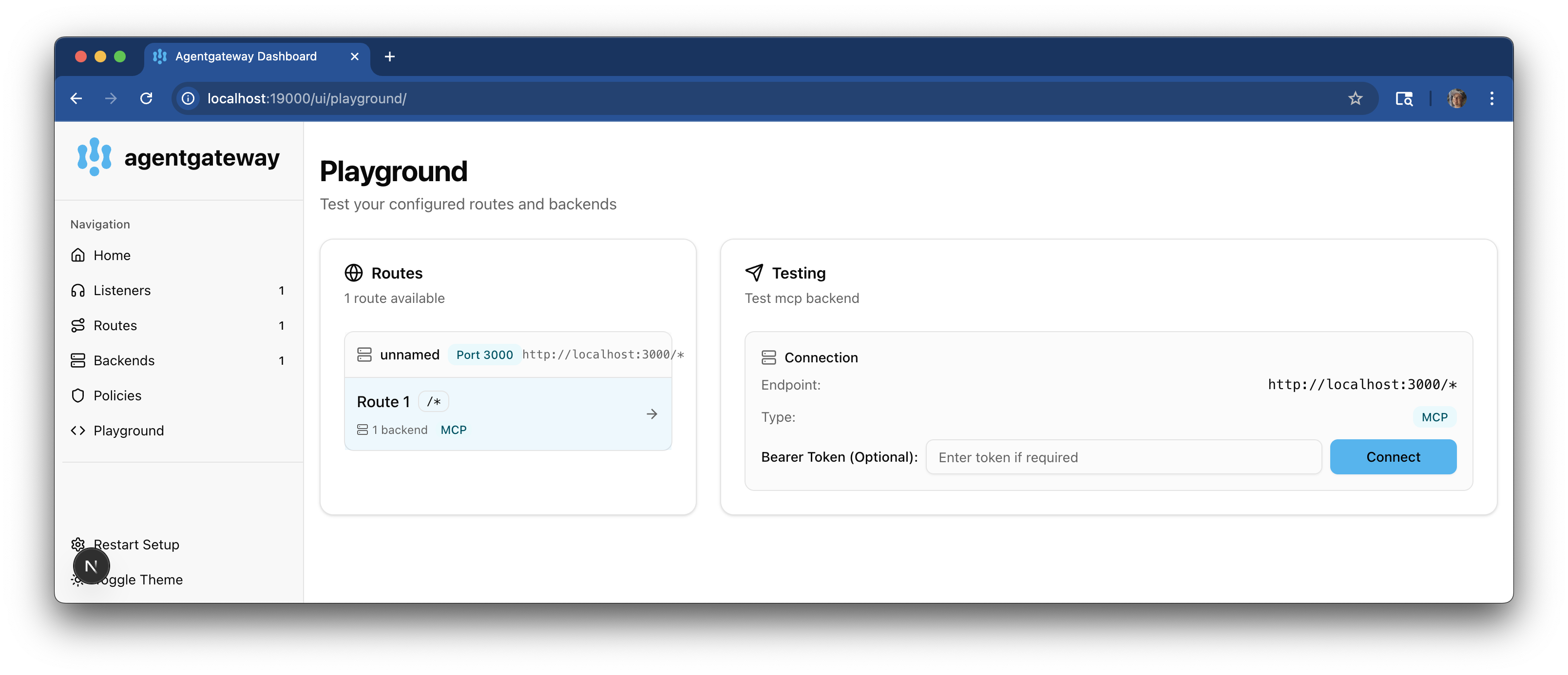
From the navigation menu, click Playground.
-
In the Testing card, review your Connection details and click Connect. The agentgateway UI connects to the targets that you configured and retrieves the tools that are exposed on the targets.
-
Verify that you see a list of Available Tools. Note that the tools are listed twice, one time with the prefix
timeand one time with the prefixeverything. You now have a federated view of all the tools that are exposed on all defined targets.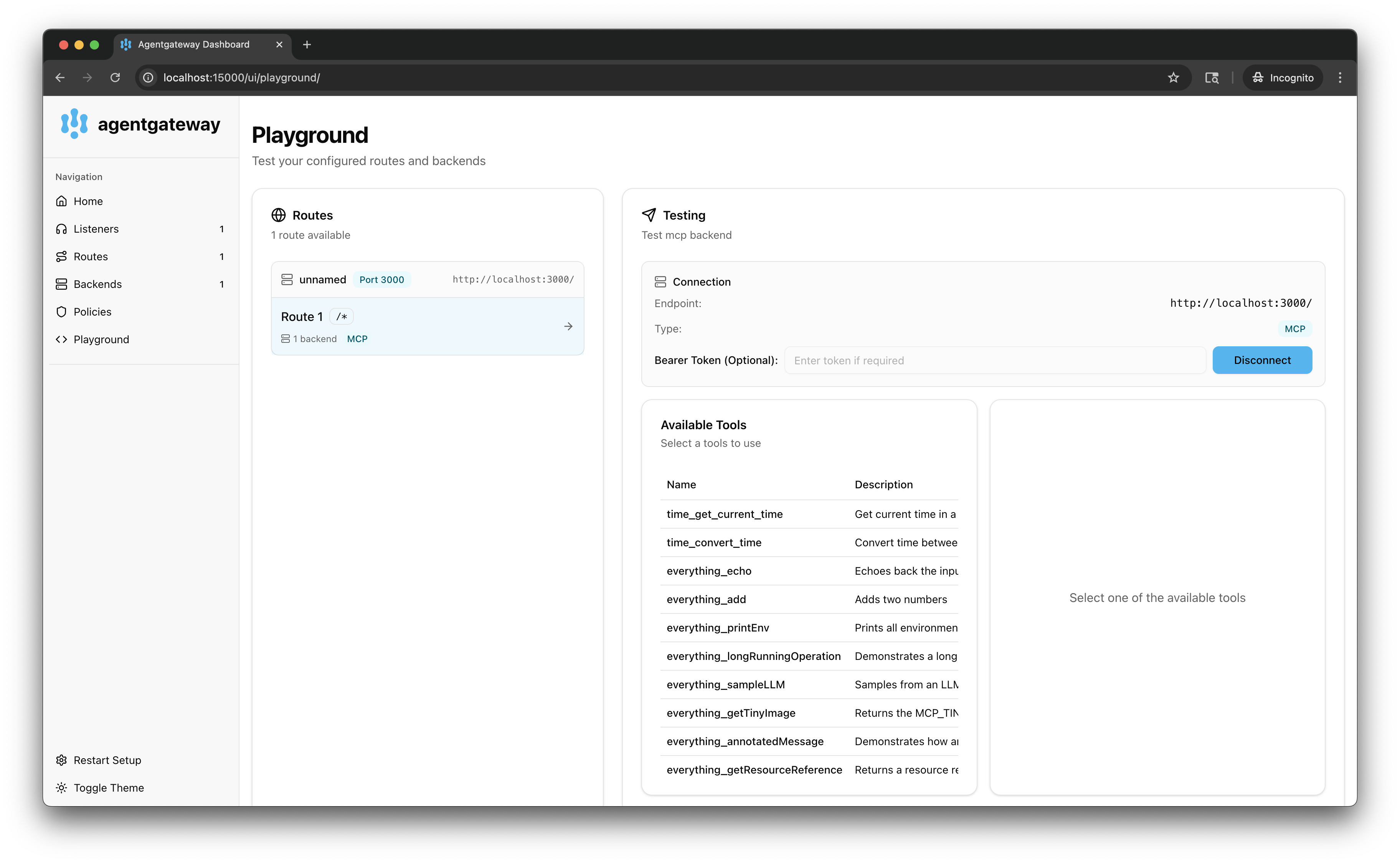
-
-
Verify access to tools from both targets.
-
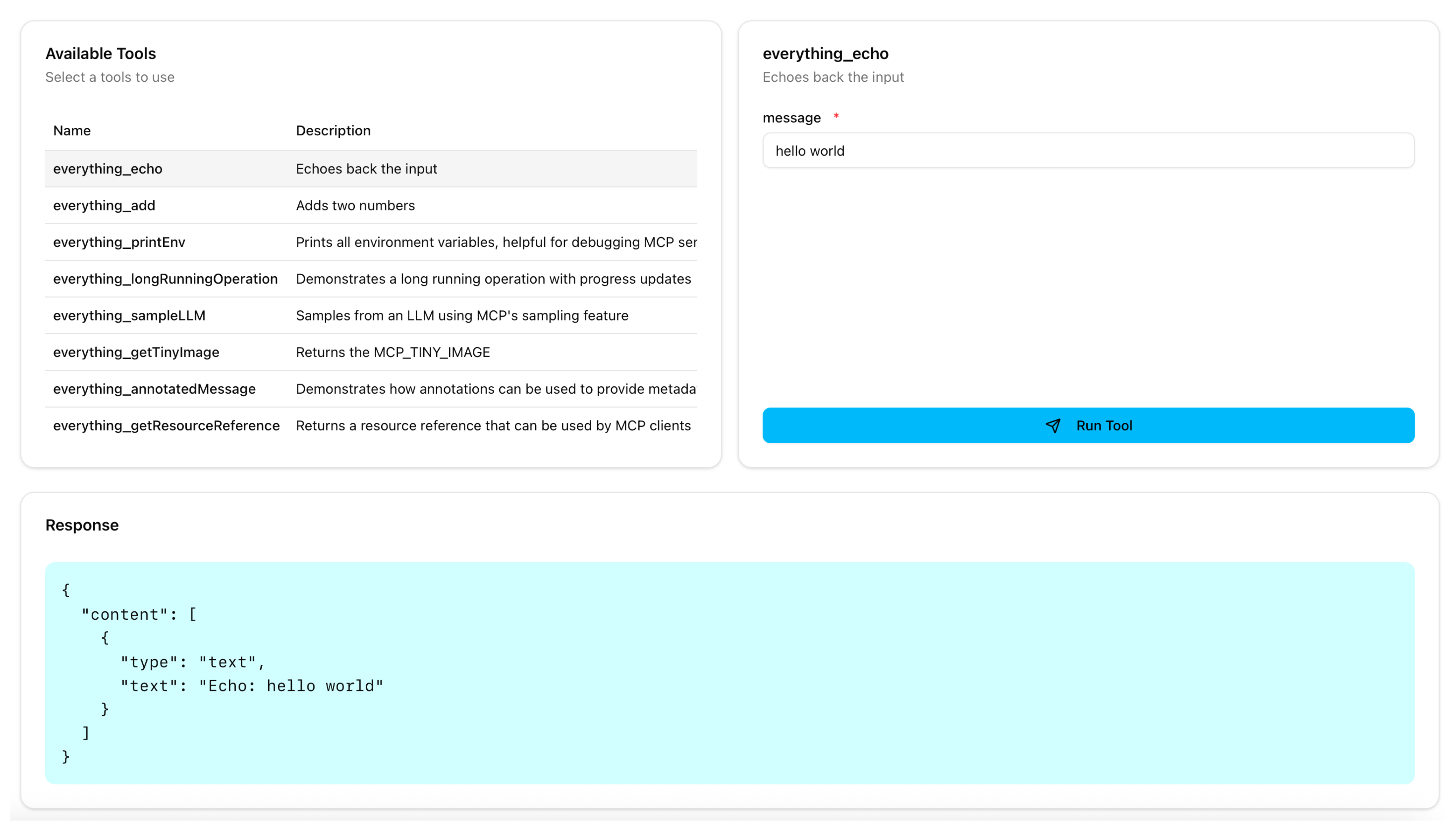
From the Available Tools list, select the
everything_echotool. -
In the message field, enter any string, such as
hello world, and click Run Tool. -
Verify that you see your message echoed in the Response card.
-
Repeat the steps with the
time_get_current_timetool with your timezone, such asAmerica/New_York.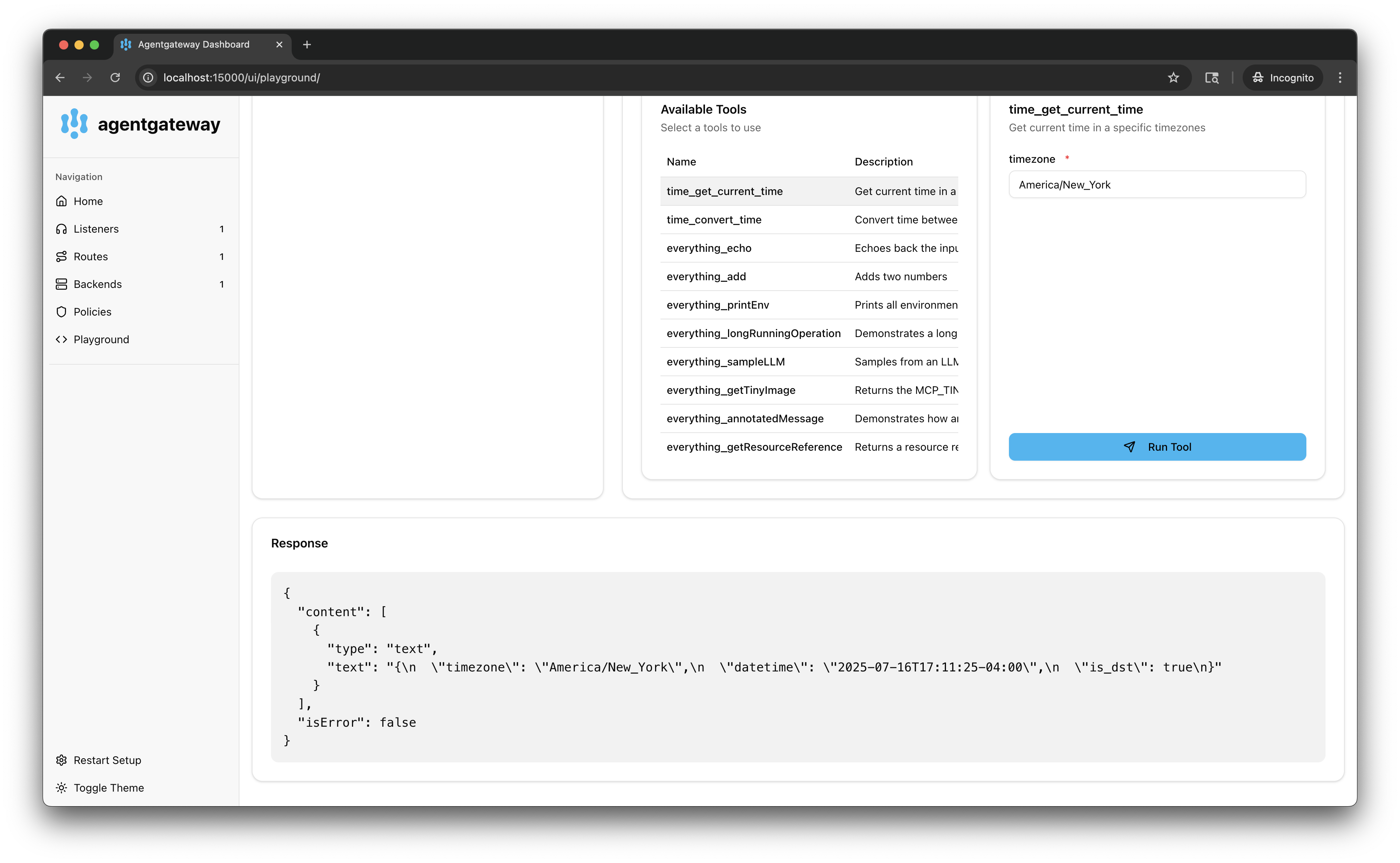
-